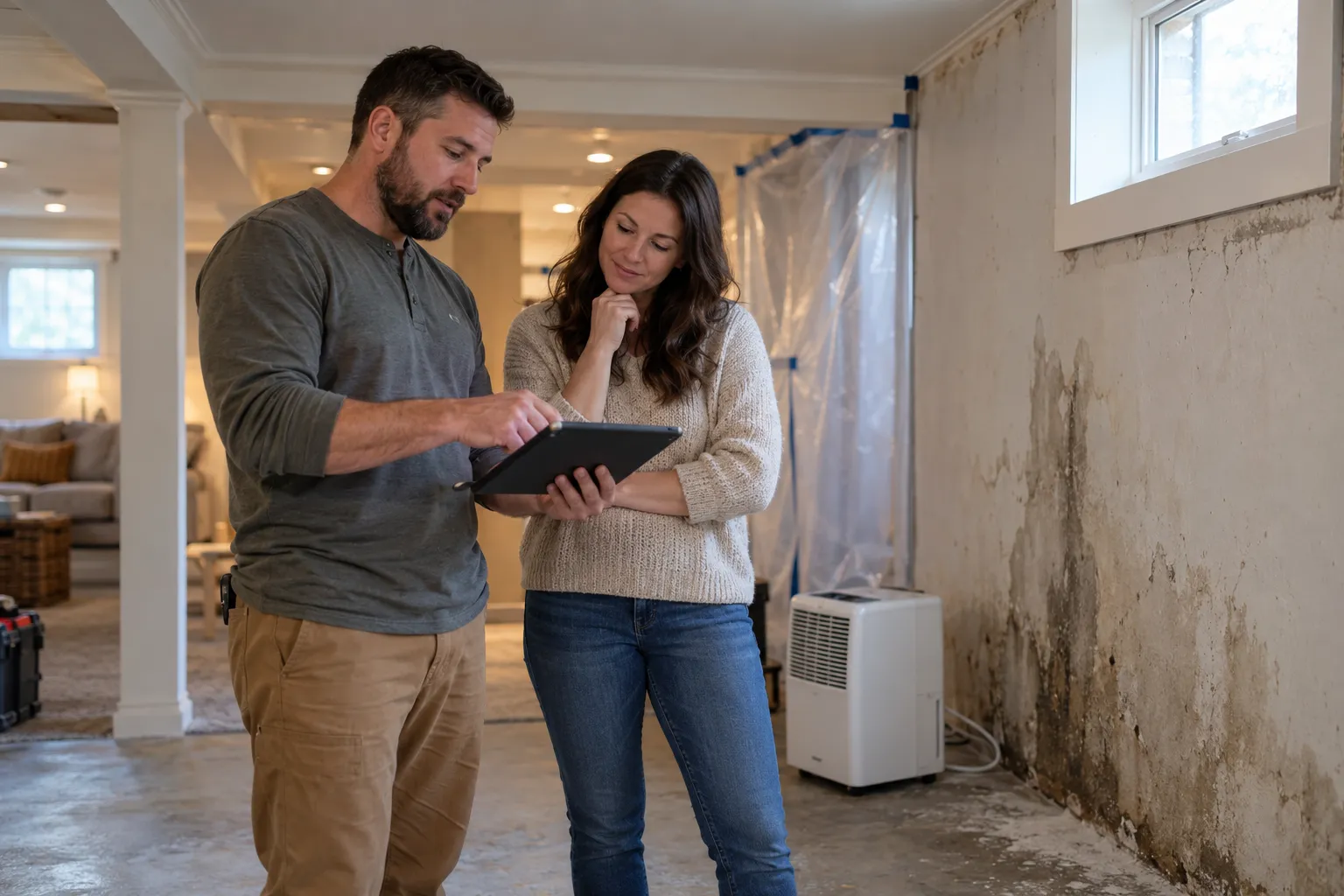
Mold Remediation Help
Mold is stressful, but the path forward is simple once you know the steps and who does what.

Found mold and not sure what to do next? Habitsinternet Mold Help connects you with independent local providers, so you can ask questions, compare estimates and choose at your own pace.
Finding a musty smell in the basement, or a dark patch on a ceiling, can make your stomach drop. Take a breath. You are far from the first person in the Leesburg area to see this, and it is very workable.
If this is your first time dealing with mold, the hardest part is knowing where to begin. That is what Habitsinternet Mold Help is for. It is a referral service. It connects homeowners in Leesburg with independent local providers who inspect, test and remove mold. Habitsinternet Mold Help does not do the work itself.
Here is the simple path. You share a little about your home and what you have noticed. A provider in the network reaches out to talk it through. You can compare what different providers suggest, ask all your questions, and decide when you feel ready. There is no obligation.
Not sure whether you need testing, cleanup, or just a closer look? That is a very normal question. A provider can help you sort it out.
Would you rather talk it over first? Request a callback to check provider availability in your part of town.
Habitsinternet Mold Help is a referral service, nothing more and nothing less. Think of it as a friendly doorway between you and local businesses that handle mold every week. You tell the service what is going on. It points you toward a provider who fits.
Nobody rushes you. Asking for an estimate does not commit you to anything.
The providers in the network are independent companies. Depending on the job, they may inspect a space, take samples for lab testing, remove mold-damaged materials, clean affected areas, and help with drying. Each one sets its own prices, schedule and methods. That is why comparing matters.
Habitsinternet Mold Help does not perform inspections, testing or cleanup. It does not set prices, and it cannot promise a result. Your provider handles the work and puts the details in writing. Habitsinternet Mold Help simply helps you find the right person to ask.
Homes across the Leesburg area deal with a lot of moisture. Humid summers leave damp air hanging in basements. Nor'easters push water against foundations. Freeze-thaw winters open tiny cracks that let it in. Add the age of many homes, and mold becomes common.
Colonial and split-level houses often have basements that stay cool and damp. In older neighborhoods, rowhouses can trap moisture between shared walls. Aging cast-iron and galvanized plumbing may leak slowly inside walls where you cannot see it.
Providers in the network work in homes like these all the time. They know the usual trouble spots, from sump areas to bathroom fans to attic vents. When you request an estimate, you are matched with a provider that serves Leesburg and nearby communities.
If you would rather speak with someone, request a callback to check provider availability near you.
Mold needs moisture and time. That is all. A leak, a damp corner or poor airflow can give it both. Seasonal swings in humidity make this more likely, especially in basements and closed-up rooms.
Older cast-iron and galvanized pipes can corrode and drip inside walls for months. You may never see it. A stain, bubbling paint or a soft spot in a floor can be the first hint. Fixing the water source matters as much as the cleanup.
If you can, stop the water source. Run a fan or dehumidifier. Take dated photos. Try not to scrub large patches or blow air across them, since that can spread spores. Then ask a provider what they recommend.
An inspection is a careful look at the home, often with a moisture meter. Testing means air or surface samples sent to a lab. You do not always need it. If you search "mold inspection near me," ask each provider when testing makes sense and whether they offer certified mold testing.
Residential mold removal usually means sealing off the area, taking out damaged material, cleaning, drying, and fixing the cause. Small spots on hard surfaces are sometimes handled by homeowners. Larger or hidden growth is better left to a provider.
Color alone does not tell you the type of mold. Black mold remediation follows the same careful steps as other mold work. A lab can identify what you have. Try not to panic. Just do not leave it alone.
In the U.S., an inspection often runs a few hundred dollars. Cleanup can range from several hundred dollars for a small area to many thousands for larger jobs. Every home is different. Always ask for a written quote.
Lay estimates side by side. Check the area covered, containment, drying, disposal and any follow-up check. A lower number is not always the same job. Some policies may cover sudden damage, so check your policy, and ask providers to help document the damage.
You do not need all the answers to get started. Describe what you have noticed, and a local provider can take it from there. Requesting an estimate is simple, and you can say no at any point.
If talking feels easier, here is your backup option.
Provider hours vary, so ask about availability when you connect.
Most mold questions fall into three groups. You may need help with a full cleanup, a careful look and lab testing, or a dark growth you are worried about. Pick the one that sounds closest. You can always change course.
Mold is stressful, but the path forward is simple once you know the steps and who does what.
Not sure if that smell or stain is mold? A local inspection can help you find out calmly.
Found dark growth in your home? Here is what to do first, and how local providers handle removal.
Tell us what you are seeing and request an estimate. A local provider will follow up, and you decide what happens next. There is no obligation.
No obligationCommon clues are a musty smell, fuzzy or dark spots, peeling paint and lingering dampness. Hidden mold can sit behind walls or under floors. A local provider can inspect the area and tell you whether testing would help.
Often an inspection comes first. A provider looks for moisture and visible growth. Lab testing is added when you need to know the type or level, or when growth is hidden. Ask each provider to explain why they suggest it.
In the U.S., small areas can cost several hundred to a few thousand dollars, while larger or hidden problems can reach well into the thousands. The size, the materials and the water source all matter. Get a written quote.
It depends on your policy and the cause. Some policies may cover mold that follows sudden damage, but not slow leaks. Check your policy. Providers can often help document the damage for a claim.
You cannot tell the type by color alone. Any mold growth should be taken seriously and dealt with. A lab test can identify it, and a provider can explain safe removal steps for your situation.
No jargon and no assumptions. You get plain explanations of each step, so you know what to ask before you ever speak to a provider.
Look at more than one estimate side by side. Choose the approach that fits your home and budget.
The businesses in the network are separate, local companies. They do the inspection, testing and removal, and they put the details in writing for you.
Requesting an estimate costs you nothing but a few minutes. You decide whether to move forward.
Tell us what you are seeing and request an estimate. A local provider will follow up, and you decide what happens next. There is no obligation.
No obligation